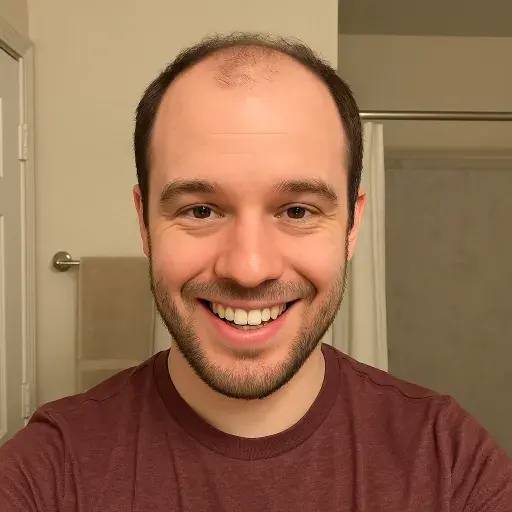

Yes — transplanted hair is generally permanent. Follicles taken from the back and sides of the scalp are genetically resistant to DHT, the hormone that causes pattern baldness, and they keep that resistance after being moved.
But this is the part most people miss: a transplant does not stop hair loss elsewhere. Your original hair around the transplanted area can keep thinning, which is why results can look worse years later even when every graft survived.
This guide from HairX Clinics explains what actually lasts, what does not, and how to plan so your result still looks right in ten years.
Why does transplanted hair survive?
Pattern baldness is not random. It follows a predictable map because follicles differ in their sensitivity to dihydrotestosterone (DHT), a derivative of testosterone.
Follicles on the top and front of the scalp are sensitive to DHT. Over years of exposure they miniaturise — each growth cycle produces a finer, shorter hair until the follicle stops producing visibly.
Follicles at the back and sides — the donor area — are not sensitive to DHT. This is why men with advanced baldness almost always keep a horseshoe of hair around the back and sides.
The catch nobody explains properly
A transplant relocates hair. It does not change the genetics of the hair you already have.
Picture someone who has a transplant at 28 to rebuild a receded hairline. Every graft takes and grows. But their native hair behind the new hairline is still DHT-sensitive and still thinning. By 35, they can have a dense transplanted hairline with a visibly thinning area directly behind it — a result that looks less natural than before surgery.
The grafts did not fail. The plan did.
What to expect year by year
| Period | What happens |
|---|---|
| Weeks 2 – 6 | Transplanted hairs shed. Expected and normal — the follicle stays in place |
| Months 3 – 4 | New growth begins, fine and sparse at first |
| Months 6 – 9 | Noticeable density; hair thickens and takes on normal texture |
| Months 12 – 18 | Final result. This is when the outcome should be judged |
| Years 2 – 10+ | Transplanted hair persists. Native hair may continue thinning |
How to protect your result long-term
- Treat the loss, not just the gap — medical treatment to slow ongoing loss is often recommended alongside surgery, especially for younger patients
- Accept a conservative hairline — a higher, softer hairline ages far better than an aggressively low one
- Keep donor supply in reserve — you may need grafts for the crown later; spending everything at once removes that option
- Get reassessed periodically — patterns change, and so should the plan
- Be honest about family history — it is the best available predictor of how far your loss will go
Will you need a second session?
Many people do, and that is not a sign anything went wrong. Two common reasons:
Progressive loss. The original transplant covered the area that was bald then. Years later, a new area has thinned and needs coverage.
Density refinement. Large areas are sometimes covered in two planned stages, particularly when donor supply is limited relative to the area needing coverage.
Ask about this before your first procedure, not after. A clinic that maps out how much donor supply is being used and how much is being held back is planning properly.
Plan for the result you want in ten years
At HairX Clinics we assess your donor supply and likely loss pattern, then plan coverage with future progression in mind — not just the area that bothers you today.
Frequently asked questions
Can transplanted hair fall out permanently?
The initial shedding in the first weeks is temporary and expected. Permanent loss of transplanted grafts is uncommon and usually points to a technical issue — grafts damaged during handling, placed too densely for the blood supply, or a post-operative infection. Choosing an experienced team is the main protection.
Does transplanted hair grey like normal hair?
Yes. It behaves like the hair from its original location, including greying with age. It also needs cutting and washing normally.
Can I have a transplant if I am completely bald?
It depends entirely on your donor area. If the back and sides still have good density, coverage is possible — though extensive baldness may need staged sessions and realistic expectations about achievable density. If the donor area is also depleted, a transplant may not be advisable.
Is a transplant better than medication?
They do different jobs. Medication slows further loss and can thicken miniaturising hair, but does not restore follicles that are already gone. Surgery restores coverage where hair is gone, but does not protect remaining hair. For many patients the two are used together.
How long before I can exercise again?
Light walking is usually fine within days. Strenuous exercise, heavy lifting, swimming and saunas are typically restricted for a few weeks to protect healing grafts and avoid sweating into the recipient area. Follow the specific timeline your clinic gives you.
How long does a hair transplant last?
A hair transplant lasts a lifetime, because the follicles are taken from the donor zone at the back and sides of the scalp where hair is genetically resistant to DHT, and they keep that resistance after they are moved. The transplanted hair itself does not thin on the usual pattern-baldness timeline. What changes the look of the result over ten or twenty years is the untransplanted hair around it, which is why the long-term plan matters more than the surgery date.
How successful are hair transplants?
Graft survival in a hair transplant is commonly reported at around 90 to 95 per cent when the procedure is performed by an experienced team, and that figure falls when grafts are handled roughly, left out of the body too long, or packed more densely than the blood supply can feed. Survival is not the same as satisfaction: a result with excellent survival can still disappoint if the hairline was designed badly or the donor area was overharvested. HairX Clinics declines cases where the donor area cannot support the coverage a patient is asking for, because a technically successful session built on the wrong plan still reads as a failed result.
How many hair transplants can a person have?
Most people can have two or three hair transplants over a lifetime, and the limit is set by the donor area rather than by any rule about the number of procedures. Each session permanently removes follicles from the back and sides, so the donor supply only ever shrinks. A second session is normally spaced at least twelve months after the first, so the earlier result has fully matured before anything is added to it.
The bottom line
Transplanted follicles are permanent because they keep their DHT resistance. But the hair around them is not protected, and that is what determines whether your result still looks natural a decade later.
The right question is not will the grafts last — it is what is the plan for the hair that is still thinning.
See your result before you book. A full year of it, from photos on your phone.
HairX is the first hair transplant clinic in the world to show you the twelve-month result and the graft count you need before you speak to anyone. It is free and it takes minutes. The report covers your stage of hair loss, what your donor area can realistically give, and how the result comes in month by month, including the third month, when it looks worse before it gets better.