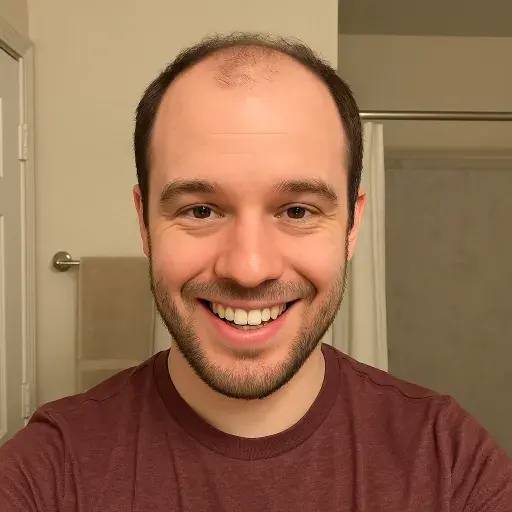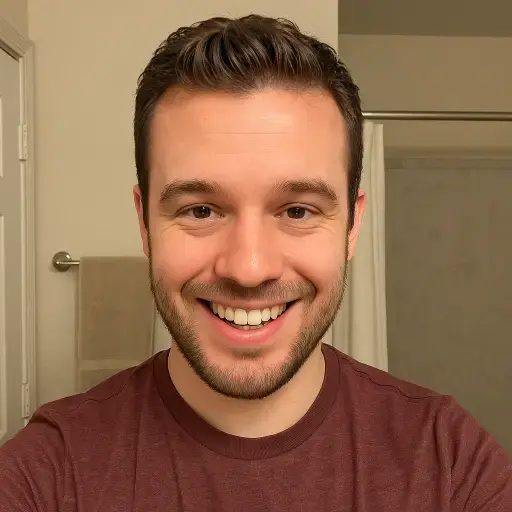
Travelling abroad for a hair transplant is as safe as the clinic you choose, not as safe as the country you fly to. The procedure itself is minor surgery under local anaesthetic; the risk sits in who holds the punch, how many patients share your surgeon that day, and what happens after you fly home.
The question worth asking is not “is Egypt safe” or “is Turkey safe” — it is “will a doctor perform my extraction, and can I reach that doctor in month four?”
Every year tens of thousands of British and Gulf patients fly out for hair restoration, and the reporting that follows tends to swing between two unhelpful poles: glossy transformation reels on one side, tabloid horror stories on the other. Neither tells you how to assess risk. This guide, from HairX Clinics, sets out what actually determines whether a hair transplant abroad goes well — the clinical variables, the regulatory ones, and the aftercare gap that causes most of the disappointment.
- What are the real medical risks of a hair transplant?
- Who is actually performing the surgery?
- Does the country matter, or only the clinic?
- What should I verify before I book?
- What happens after I fly home?
- What actually goes wrong when it goes wrong?
- When is travelling to us the wrong choice?
- Which red flags should stop me booking?
What are the real medical risks of a hair transplant?
A follicular unit extraction is performed under local anaesthetic, through the skin, with no general anaesthesia and no deep tissue involvement. In that narrow sense it is one of the lower-risk elective procedures a healthy adult can have. The complications that do occur fall into a short and well-understood list.
| Risk | What it looks like | What reduces it |
|---|---|---|
| Infection | Localised redness, pus, pain beyond the first few days | Sterile technique, clean theatre, proper post-op washing instructions |
| Poor graft survival | Thin density at month 12 despite a high graft count | Short time out of body, careful handling, correct storage solution |
| Over-harvesting | Visibly thinned or patchy donor area, permanent | Honest assessment of donor capacity before, not during, surgery |
| Unnatural hairline | Straight, low, or wrongly angled front line that ages badly | Hairline designed by the surgeon with the patient, in a mirror, before shaving |
| Shock loss | Temporary shedding of existing hair around the recipient area | Usually self-resolving; see our guide on shock loss |
Notice what is not on that list: death, disfigurement, anaesthetic catastrophe. Those headlines almost always trace back to unlicensed operators working outside a medical facility, not to the procedure.
Who is actually performing the surgery?
This is the single most important question in the entire process, and it is the one most patients never ask.
A hair transplant has three technical stages: extraction of the grafts, creation of the recipient incisions, and implantation. In many high-volume clinics, a doctor performs the consultation and the anaesthetic, then leaves the room — and technicians perform all three stages. The clinic is not lying when it says “our doctors have performed 10,000 procedures.” It is simply not saying who held the instrument during yours.
Technician involvement is not inherently wrong — trained technicians are standard in hair restoration worldwide, and a good one implanting under supervision is safer than a distracted doctor. The problem is the unsupervised version: a surgeon nominally overseeing three or four simultaneous cases in different rooms, present for minutes, accountable for none of them.
Does the country matter, or only the clinic?
Mostly the clinic. But the country sets the floor.
What a country’s regulation determines is how far below acceptable a clinic is allowed to fall before someone stops it, and what recourse you have if it does. In practice that means three things worth checking wherever you go: whether the facility is licensed as a medical facility rather than a salon or a hotel suite; whether the operating surgeon is registered with the national medical authority; and whether a complaints route exists that a foreign patient can actually use.
Egypt’s clinics are licensed by the Ministry of Health and surgeons are registered with the Egyptian Medical Syndicate — both verifiable before you fly. We compare the destinations directly in Egypt or Turkey for a hair transplant.
What should I verify before I book?
- The surgeon’s registration. A name, not a clinic brand. Ask for it and check it against the national register.
- The facility licence. Surgery belongs in a licensed medical facility with resuscitation equipment, not a converted apartment.
- The consultation. A real assessment looks at your donor density and your family pattern of loss. A WhatsApp quote from a photograph is a sales step, not an assessment.
- Cases per surgeon per day. Ask how many patients the operating surgeon will treat on your date.
- Graft count honesty. Be wary of a number quoted before anyone has examined your donor area — see how many grafts you actually need.
- The written plan. Technique, zones, graft distribution, and what happens if you are unhappy — in writing, before deposit.
- The follow-up route. A named contact, a channel, and defined checkpoints at months 3, 6 and 12.
What happens after I fly home?
Here is the structural weakness of medical travel, and it has nothing to do with surgical skill: the surgery lasts a day, the result takes a year, and you will spend eleven and a half of those months in another country.
Most of what patients describe as “a botched transplant abroad” is not a botched transplant. It is month four, when the transplanted hair has shed, the original hair has thinned from shock loss, and the patient looks worse than before surgery — which is the normal, expected trough that every honest clinic warns about and many do not. Without someone to reassure you that this is the timeline working correctly, month four feels like a disaster. Our month-by-month results guide sets out what each stage should look like.
Before you book anywhere, establish what structured follow-up exists: scheduled video reviews at defined intervals, a route to send photographs and get a clinical response, and a stated position on revision if density falls short at twelve months.
See what your donor area can actually support — before you book anything
Our free AI hair analysis reads five photographs and returns a per-zone graft plan, a written surgical rationale, and a four-frame projection of day 1, month 3, month 6 and month 12 — as a PDF you keep. It is an assessment tool, not a quote, and it is reviewed by our surgical team before any consultation.
What actually goes wrong when it goes wrong?
The characteristic failures of medical travel are not surgical disasters. They are gaps in accountability that only become visible months after you are home.
- Density that falls short at twelve months. The commonest disappointment, and the hardest to resolve from another country, because the person who assessed you cannot look at your scalp.
- A hairline that ages badly. Placed too low or too straight, it looks convincing at thirty and wrong at fifty. Correcting it costs donor hair you cannot replace.
- An over-harvested donor area. Visible thinning at the back and sides is permanent, and it removes the option of a second procedure.
- A wound problem in the first fortnight, when you are back home, your GP has no operative notes, and the clinic is in a different time zone.
- No practical recourse. Complaints and redress in another jurisdiction, in another language, are slow and often not worth pursuing — which is precisely why the checks belong before the deposit, not after.
The NHS is blunt about several of these. Its guidance on cosmetic surgery abroad states that overseas clinics may not provide follow-up treatment, or may not provide it to the same standard as in the UK; that travel insurance does not normally cover things going wrong in surgery; that you should have two consultations with the operating surgeon, giving a cooling-off period that is normally two weeks in the UK; and that air travel after surgery raises the risk of a blood clot. A single sales call followed by a flight booked the same week is the opposite of that advice, whichever country the clinic is in.
When is travelling to us the wrong choice?
Plainly: whenever travel would cost you more than it saves. These are cases in which we would tell you to stay at home, and some in which we would decline to operate at all.
- Your loss has not stabilised. Operating into an actively receding pattern produces a good front and an island of transplanted hair behind a widening gap. We would ask you to treat it medically and come back.
- You have a condition that makes travel or local anaesthetic higher risk. Cardiac disease, anticoagulation, poorly controlled diabetes: being operated on where your medical records are held is worth more than any saving.
- You need in-person review at short notice. If you know you would want someone to look at your scalp within a day, a clinic you can walk into beats a video call, and we would say so.
- Your loss is early and small. Diffuse thinning often responds to minoxidil or finasteride, and not operating keeps every option open.
- Price is your only reason. The cheapest offer in any market is cheap for a reason, and that reason is usually the surgeon’s time.
Which red flags should stop me booking?
- A graft number before an examination. Nobody can count your donor supply from a selfie.
- Refusal to name the operating surgeon. There is no legitimate reason to withhold it.
- Pressure to pay a deposit today. Surgical decisions do not expire at midnight.
- Guaranteed results. Biology does not offer guarantees, and no honest surgeon will.
- “Unlimited grafts.” Your donor area is finite. A clinic offering unlimited grafts is describing over-harvesting.
- No follow-up plan. If nobody can tell you what happens in month four, nobody is planning to be there in month four.
Is a hair transplant abroad more dangerous than one at home?
Not intrinsically. The procedure is identical. What changes is the difficulty of verifying the clinic beforehand and of reaching it afterwards — both of which you can address by checking registration before you fly and agreeing a follow-up schedule before you pay.
What if I need a revision?
Ask about it before booking, not after. A clinic’s revision position — what triggers it, who assesses it, who pays for travel — should be written down while you are still a prospective patient.
Should I tell my GP I am having a transplant abroad?
Yes. Your GP should know about any procedure and any medication you are prescribed, particularly if you take finasteride. It also means someone local can look at the site if you are worried.
Can I fly home the next day?
Usually yes, though most surgeons prefer you stay for a first wash and a check. Longer-haul flights are generally comfortable from day two or three.
Sources
- NHS, Cosmetic surgery abroad — follow-up may not be provided to UK standards, travel insurance does not normally cover surgical complications, two consultations and a cooling-off period, and advice on when it is safe to fly.
- NHS, Hair transplant — what the procedure involves and the NHS’s stated UK private cost range of £1,000 to £30,000.
- British Association of Hair Restoration Surgery (BAHRS), bahrs.co.uk — UK association of hair restoration surgeons, and a route to check a UK surgeon’s standing.
See your result before you book. A full year of it, from photos on your phone.
HairX is the first hair transplant clinic in the world to show you the twelve-month result and the graft count you need before you speak to anyone. It is free and it takes minutes. The report covers your stage of hair loss, what your donor area can realistically give, and how the result comes in month by month, including the third month, when it looks worse before it gets better.